Giacinta Moretti
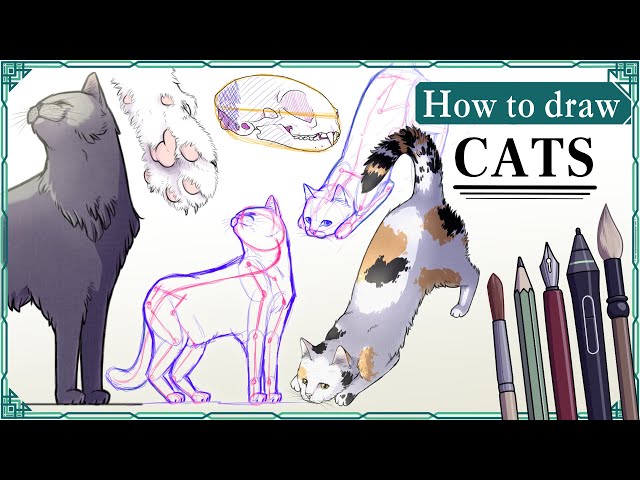
“How to draw cats” refers to a set of instructions or techniques for creating visual representations of cats on a surface using various art media. It involves capturing the feline form, proportions, and details to produce a recognizable likeness. Drawing cats can be a fun and rewarding activity for art enthusiasts, hobbyists, and professional artists alike.
Learning how to draw cats offers several benefits. It enhances observational skills, improves hand-eye coordination, and fosters creativity. Additionally, drawing cats can provide a sense of accomplishment and relaxation, making it a therapeutic and enjoyable pastime. Throughout history, cats have been depicted in various art forms, from ancient Egyptian hieroglyphs to modern paintings and illustrations.
To begin drawing cats, it’s essential to understand their basic anatomy and proportions. The body consists of a flexible spine, a rounded chest, and a muscular hindquarters. The head is characterized by large, expressive eyes, a triangular nose, and pointed ears. The limbs are slender and agile, with paws featuring retractable claws.
When drawing cats, pay attention to capturing their distinct features, such as whiskers, fur texture, and tail shape. Experiment with different drawing techniques to achieve desired effects, such as using pencils for, and experimenting with various brushstrokes for a painterly look.
Drawing cats requires patience, practice, and a keen eye for detail. With consistent effort and dedication, you can develop the skills to create beautiful and lifelike representations of these beloved creatures.
How to Draw Cats
Drawing cats encompasses several essential aspects that contribute to capturing their unique characteristics and forms. Here are seven key aspects to consider:
- Observation: Studying cats’ anatomy, proportions, and movements.
- Sketching: Creating loose, preliminary drawings to capture the basic structure.
- Details: Adding distinctive features such as whiskers, fur texture, and eye expressions.
- Shading: Using pencils or other media to create depth and volume.
- Perspective: Depicting cats from different angles and viewpoints.
- Composition: Arranging elements within the drawing for visual impact.
- Style: Developing a personal artistic approach to cat drawings.
These aspects are interconnected and influence each other throughout the drawing process. For instance, accurate observation informs sketching, while shading enhances details and creates a sense of depth. Mastering these aspects requires practice, patience, and a passion for capturing the feline form. By understanding and applying these key elements, artists can create beautiful and expressive cat drawings that showcase their artistic skills and appreciation for these beloved creatures.
Observation
Observation is a fundamental aspect of drawing cats effectively. It involves studying their physical characteristics, proportions, and movements to accurately capture their essence in your artwork.
- Understanding Anatomy: Breaking down the cat’s body into its component parts, such as the head, torso, limbs, and tail, helps you understand the underlying structure and how it affects the cat’s overall form.
- Proportions and Balance: Observing the relative sizes and proportions of different body parts is crucial for creating a harmonious and realistic drawing. Pay attention to the length of the legs, the size of the head in relation to the body, and the angles at which the limbs connect.
- Capturing Movement: Studying cats in motion helps you understand how their bodies move and change shape. Observe the way they walk, run, jump, and stretch to capture the dynamic and graceful nature of their movements.
- Gesture and Expression: By observing cats’ body language and facial expressions, you can convey their emotions and personality in your drawings. Pay attention to the way they hold their ears, arch their backs, and flick their tails.
Mastering observation skills is essential for drawing cats that are anatomically correct, well-proportioned, and full of life. By taking the time to study these aspects, you will lay a solid foundation for creating beautiful and expressive cat drawings.
Sketching
Sketching is an essential step in the process of drawing cats. It involves creating loose, preliminary drawings to capture the basic structure and proportions of the cat before adding details and shading. Sketching helps you to establish the overall composition of your drawing and to work out any potential problems with anatomy or perspective.
- Understanding the Importance of Accurate Proportions: Sketching allows you to check and adjust the proportions of the cat’s body, ensuring that the head, torso, limbs, and tail are in the correct relationship to each other. This is crucial for creating a realistic and visually appealing drawing.
- Capturing the Cat’s Gesture and Pose: Sketching enables you to capture the cat’s gesture and pose, conveying its movement and personality. By observing the cat’s body language and posture, you can sketch the basic lines that define its overall shape and attitude.
- Establishing the Composition: Sketching helps you to establish the composition of your drawing, including the placement of the cat within the frame and the arrangement of any other elements, such as or props. This step allows you to plan the overall visual impact of your drawing.
- Correcting Mistakes Early On: Sketching provides an opportunity to identify and correct any mistakes in the cat’s anatomy or proportions at an early stage. By making these corrections in the sketch, you can avoid having to make major changes later on, saving time and effort.
Overall, sketching is a fundamental step in the process of drawing cats, as it allows you to establish the basic structure, proportions, and composition of your drawing. By taking the time to sketch carefully, you can lay the groundwork for a successful and visually appealing finished product.
Details
When drawing cats, capturing the details that make each feline unique is essential. Adding distinctive features such as whiskers, fur texture, and eye expressions brings life and character to your drawings, transforming them from simple sketches into captivating works of art. These details not only enhance the realism of your drawings but also convey the cat’s personality and emotions.
Whiskers, with their sensitive nerve endings, play a crucial role in a cat’s perception of its surroundings. By carefully observing and drawing the length, thickness, and curvature of the whiskers, you can convey the cat’s alertness and curiosity. Fur texture is another important detail to consider. Different cat breeds have varying fur lengths, densities, and patterns. By using appropriate drawing techniques, such as cross-hatching or stippling, you can create the illusion of soft, fluffy fur or sleek, shiny coats.
The eyes are often referred to as the windows to the soul, and this is especially true for cats. By capturing the shape, color, and expression of the eyes, you can convey a wide range of emotions, from contentment and playfulness to alertness and curiosity. Pay attention to the pupils’ size and shape, as they can indicate the cat’s mood and lighting conditions.
Understanding the importance of details in drawing cats allows you to create more realistic and expressive artworks. By incorporating these distinctive features into your drawings, you can bring the unique personality and charm of cats to life on paper.
Shading
In the realm of cat drawings, shading plays a pivotal role in creating depth, dimension, and the illusion of volume. It involves using pencils or other media to manipulate values and tones, adding shadows and highlights to bring the cat’s form to life.
- Defining Form and Structure: Shading helps define the cat’s overall shape and structure by creating a sense of depth. By understanding how light interacts with different surfaces, artists can use shading to accentuate the cat’s contours, muscles, and other anatomical features.
- Creating Texture and Realism: Shading is essential for capturing the texture and detail of a cat’s fur. By varying the pressure and direction of pencil strokes, artists can create the illusion of soft, fluffy fur or sleek, shiny coats, enhancing the realism of their drawings.
- Conveying Mood and Atmosphere: Shading can be used to convey the mood and atmosphere of a cat drawing. By adjusting the contrast and distribution of light and shadows, artists can create dramatic effects, such as a mysterious feline lurking in the darkness or a playful kitten basking in the sun.
- Adding Depth and Dimension: Shading adds a sense of depth and dimension to cat drawings, making them appear more three-dimensional. By skillfully manipulating light and shadow, artists can create the illusion of depth and recession, making the cat appear to occupy a specific space within the drawing.
In conclusion, shading is an indispensable aspect of drawing cats, enabling artists to create realistic, expressive, and dynamic artworks. By mastering the techniques of shading, artists can capture the unique characteristics and personalities of these beloved creatures, bringing their drawings to life.
Perspective
Perspective is a crucial component of drawing cats, as it allows artists to depict these animals from various angles and viewpoints. Understanding perspective enables artists to create more dynamic and realistic cat drawings that capture their three-dimensional form and spatial relationships.
By exploring different perspectives, artists can convey a cat’s posture, movement, and interaction with its surroundings more effectively. For instance, drawing a cat from a high angle can emphasize its vulnerability, while a low angle can make it appear more powerful and commanding. Depicting a cat from the side allows artists to showcase its graceful lines and elegant movements.
Furthermore, understanding perspective is essential for creating accurate and visually appealing compositions. By carefully considering the placement of the cat within the frame and its relationship to other elements, artists can guide the viewer’s eye and create a sense of depth and.
In conclusion, perspective is an indispensable element of drawing cats, enabling artists to create dynamic, realistic, and visually engaging artworks. By mastering the techniques of perspective, artists can capture the unique characteristics and personalities of cats from various angles and viewpoints, bringing their drawings to life.
Composition
Composition plays a vital role in creating visually appealing and impactful cat drawings. It involves arranging the elements within the drawing, including the cat itself, any background elements, and negative space, to achieve a harmonious and balanced design. Understanding and applying the principles of composition can elevate a cat drawing from a simple sketch to a captivating work of art.
One of the key aspects of composition is the placement of the cat within the frame. By carefully considering the cat’s position and orientation, artists can create a sense of movement, energy, or stillness. For instance, placing the cat in the center of the frame can create a sense of symmetry and stability, while placing it off-center can add a sense of dynamism and energy.
Another important element of composition is the use of negative space. Negative space refers to the areas of the drawing that are not occupied by the cat or other objects. By carefully managing negative space, artists can create a sense of depth and atmosphere in their drawings. For example, using a large area of negative space around the cat can emphasize its isolation or vulnerability, while filling the negative space with intricate details can create a sense of richness and complexity.
Understanding composition is essential for creating cat drawings that are visually engaging and communicate a clear message or emotion. By mastering the principles of composition, artists can create drawings that capture the unique personality and characteristics of cats, evoking a range of emotions in the viewer.
Style
In the realm of “how to draw cats,” style plays a pivotal role in shaping the artist’s unique perspective and creative expression. Developing a personal artistic style involves experimenting with various techniques, mediums, and approaches to create cat drawings that stand out from the rest.
- Line and Form: The way an artist uses lines and shapes to depict a cat’s form conveys their personal style. Some artists may prefer bold, expressive lines to capture the dynamic energy of a cat, while others may opt for, flowing lines to convey a sense of elegance and grace.
- Color and Value: The choice of colors and values can significantly impact the mood and atmosphere of a cat drawing. Some artists may use vibrant, contrasting colors to create eye-catching compositions, while others may prefer a monochromatic palette to emphasize the cat’s form and texture.
- Texture and Detail: The level of detail and the way an artist renders texture can contribute to the overall style of a cat drawing. Some artists may focus on capturing every hair and whisker, creating highly realistic drawings, while others may prefer a more stylized approach, simplifying forms and textures to convey the cat’s essence.
- Composition and Perspective: The arrangement of elements within a cat drawing, as well as the perspective from which the cat is depicted, can enhance the artist’s personal style. Some artists may choose to place the cat in the center of the frame, using a traditional approach, while others may experiment with dynamic angles and unconventional compositions to create visually striking drawings.
By exploring and refining their personal style, artists can create cat drawings that are not only technically proficient but also expressive and unique. A distinctive style allows artists to convey their individual interpretations of the feline form, capturing the essence and beauty of cats in their own artistic language.
Frequently Asked Questions about “How to Draw Cats”
This section addresses common questions and misconceptions related to drawing cats. These questions are answered in a clear and informative manner to guide aspiring artists in their pursuit of capturing the feline form.
Question 1: What are the essential materials needed for drawing cats?
Pencils of varying grades (HB, 2B, 6B), an eraser, a sharpener, and drawing paper are the fundamental materials required for drawing cats.
Question 2: How do I capture the proportions of a cat accurately?
Observing live cats or using reference images is crucial. Pay attention to the relative sizes of the head, body, limbs, and tail. Sketching lightly and measuring distances with a pencil can aid in achieving accurate proportions.
Question 3: What techniques can I use to create realistic fur textures?
Using a variety of pencil strokes, such as short, quick strokes for short fur and long, flowing strokes for longer fur, can create the illusion of texture. Experiment with different pencil grades to achieve varying shades and depths.
Question 4: How can I convey the emotions and personality of a cat through my drawings?
Study cat behavior and expressions to understand how they communicate emotions. Pay attention to the positions of the ears, tail, and body, as they can indicate a cat’s mood or intentions.
Question 5: What are some common mistakes beginners make when drawing cats?
Ignoring proportions, neglecting details, and using overly dark lines are common pitfalls. Practice regularly, observe cats closely, and seek feedback to improve technique.
Question 6: How can I develop my own unique style for drawing cats?
Experiment with different techniques, study the works of other artists, and draw cats from various angles and perspectives. Over time, a unique style will emerge that reflects your personal interpretation of the feline form.
These FAQs provide a foundation for understanding the key aspects of drawing cats. With practice, patience, and a passion for capturing the feline essence, aspiring artists can create beautiful and expressive cat drawings.
Transition to the next article section:
To further enhance your cat drawing skills, explore the following comprehensive guide, which delves into advanced techniques and provides expert tips for capturing the beauty and character of these beloved creatures.
Tips for Drawing Cats
Enhancing your ability to draw cats requires dedication and the application of effective techniques. Here are several tips to guide your artistic journey:
Tip 1: Study Feline Anatomy and Proportions: Understanding the structure and proportions of a cat’s body is fundamental. Observe cats in various poses, paying attention to the relative lengths of limbs, the size of the head, and the shape of the spine. Sketching from life or using reference photos can aid in developing an accurate understanding of cat anatomy.
Tip 2: Master Shading Techniques: Shading adds depth and volume to your drawings, bringing the cat’s form to life. Experiment with different pencil grades to create a range of tones. Use hatching, cross-hatching, and blending techniques to achieve smooth transitions and realistic fur textures.
Tip 3: Capture the Eyes and Expressions: The eyes are often referred to as the windows to the soul, and this is especially true for cats. Pay attention to the shape, color, and expression of the eyes, as they convey a cat’s mood and personality. Practice drawing eyes from different angles to master capturing their captivating gaze.
Tip 4: Pay Attention to Details: Details bring life to your cat drawings. Render whiskers, fur patterns, and subtle nuances with precision. Use fine lines and delicate strokes to create a sense of realism and enhance the overall impact of your artwork.
Tip 5: Experiment with Composition and Perspective: Composition refers to the arrangement of elements within your drawing. Experiment with different placements of the cat, varying the angle and viewpoint to create dynamic and visually appealing compositions. Try drawing cats from above, below, or at eye level to explore unique perspectives.
Tip 6: Seek Feedback and Refine Your Skills: Share your drawings with fellow artists, instructors, or online communities for constructive criticism. Feedback can help identify areas for improvement and guide your artistic growth. Regularly practice and refine your techniques to enhance your ability to capture the essence and beauty of cats.
These tips provide a solid foundation for improving your cat drawing skills. With consistent effort and a passion for feline art, you can create captivating and expressive drawings that celebrate the unique charm and character of these beloved creatures.
Conclusion
Throughout this comprehensive guide, we have explored the intricacies of “how to draw cats,” delving into essential principles and effective techniques. From understanding feline anatomy and proportions to mastering shading, capturing expressions, and experimenting with composition, we have provided a roadmap for aspiring artists seeking to capture the beauty and character of these beloved creatures.
As you embark on your artistic journey, remember that the pursuit of excellence is an ongoing process. Practice regularly, study cats in their natural environments, and seek inspiration from the works of renowned cat artists. By honing your skills and embracing the unique qualities of each cat, you will develop the ability to create captivating and expressive drawings that celebrate the feline form.
The world of cat drawing is vast and ever-evolving, offering endless opportunities for exploration and creativity. Embrace the challenge of capturing the essence of these enigmatic animals, and let your passion for feline art guide you towards artistic fulfillment.
Youtube Video: